
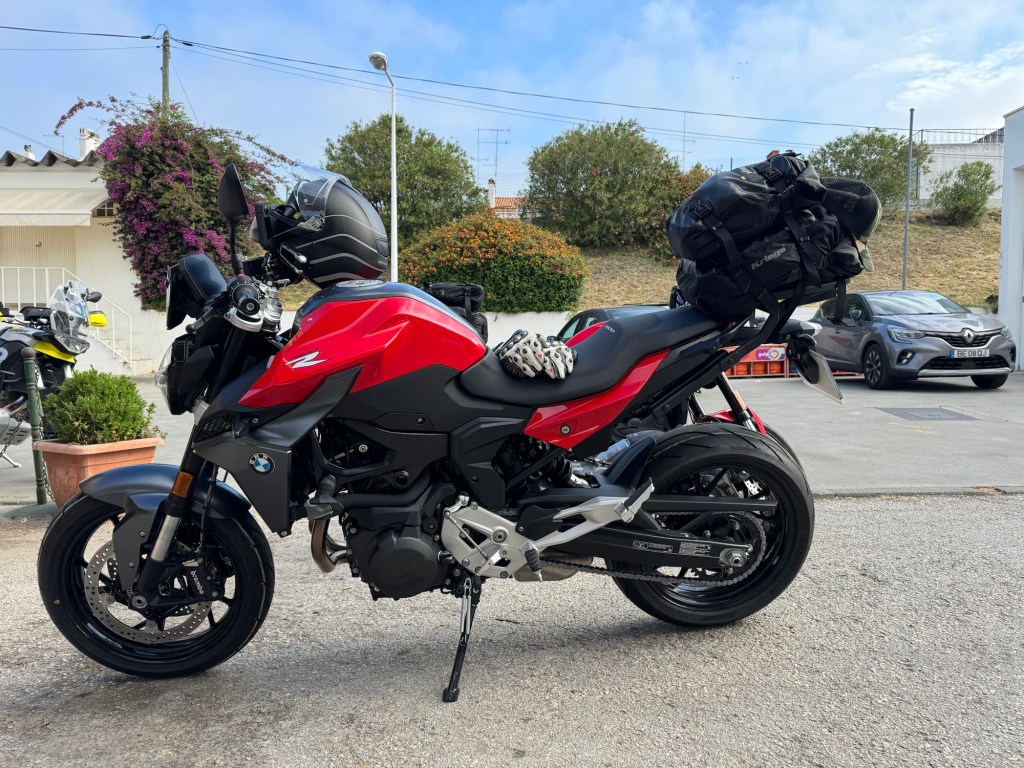
The middleweight naked bike segment is arguably the most competitive segment in street motorcycling. Every brand has a dog in this race and the very definition of what “middleweight” even means is blurring with every new model year. With all that said, how does BMW’s new F900R stack up against the competition and who is this bike for? We spent a week living with it in the mountains, cities and highways of Portugal and Spain and have some thoughts.
Powertrain
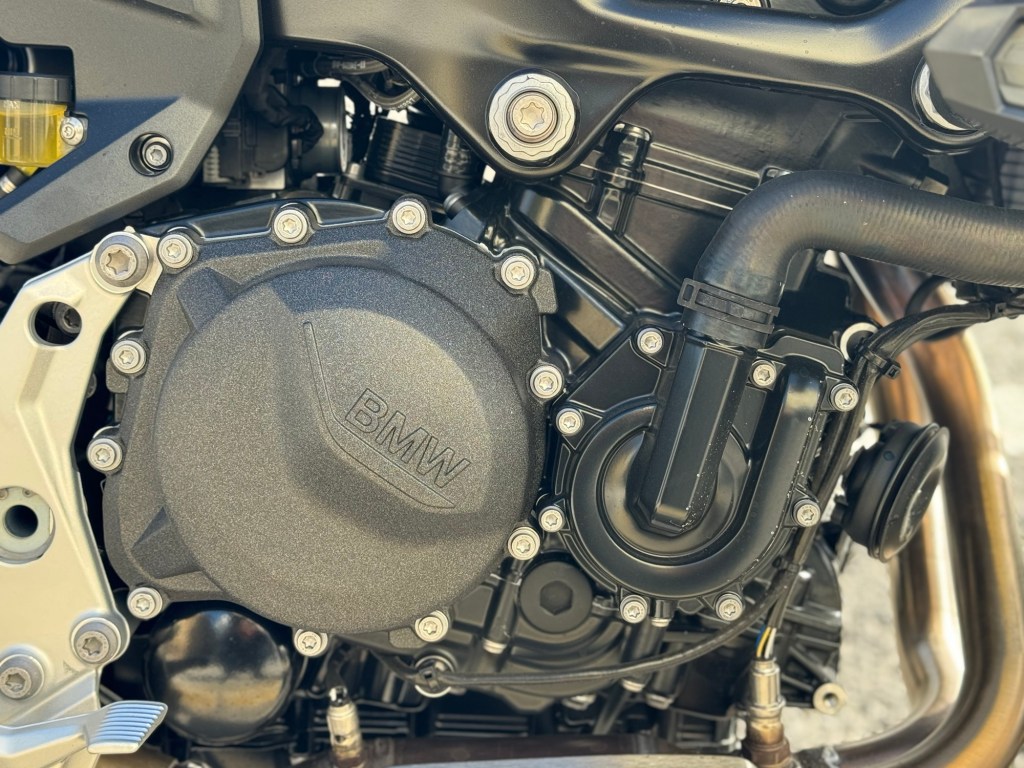
The F900R is propelled by BMW’s 895cc liquid cooled parallel twin. It makes 105HP @8,500 RPM and 69 lb-ft of torque at 6,500 RPM. It’s mated to a 6 speed transmission with a slipper clutch.
The engine (like many of the F900R’s traits) is a very capable, predictable and linear powerplant. While its happy to rev out to its 9,000 RPM redline, it’s most effective in the mid-range (between 5,000 and 8,000 RPM), delivering smooth power on demand in a way that will (should) never surprise its pilot. Response from the ride-by-wire throttle is also smooth with the exception of a slight surge in on/off throttle response at low speeds. Engine braking is strong and helps get the bike settled when braking hard (more on that later).
The motor is quiet around town and despite having a 270 degree crank, has a mostly metallic whine to it in the upper revs that won’t turn any heads but adds some excitement. Due to homologation compliance, there isn’t much of an exhaust note to speak of, adding to the F900R’s good-natured posture.
The engine’s linear power delivery makes the F900R as comfortable around town as it is on a mountain road or highway, lending itself well to a “one bike for all things” moniker. The gearbox is “German-smooth” (which is different than some of the other European manufacturers who have yet to achieve this level of refinement) with nary a missed shift or any trouble finding neutral at a stoplight.
Compared to other powertrains in its class, the middleweight R never amazes, but never disappoints. It doesn’t pack the punch of a V-Twin or large single, nor the top end rush of a triple or inline 4. What BMW has delivered here is a versatile motor with a great gearbox that suits every riding need but doesn’t excel at any of them.
Chassis & Brakes
The F900R features a non-adjustable fork and rear shock that’s adjustable for both preload and rebound. With so little adjustment, I was surprised to find the bike perform as well as it did across such a broad range of applications for my 190 lb frame. It’s worth noting that that the beemer is no featherweight: coming in at 465 lbs (wet) and when paired with a fairly conservative rake, it takes a little convincing via the wide handlebars to move through a fast chicane. Otherwise, its weight bolsters the chassis stability, making for a solid, sure-footed experience.
Around town, the suspension is on the “firm” side. Over some of Portugal’s cobblestone roads and speed bumps, the tooth chatter was decidedly present and this was the Bemmer’s least favorite type of terrain -though it was perfectly adequate. Its low speed manners are very good, with a slower steering front end than some of its competitors that provides ample forgiveness during tight manœuvres.

On highways and at Autobahn speeds, the chassis is faultless. Wind gusts from semi trucks, potholes and irregular pavement never upset the bike which provided more confidence the quicker it was ridden.
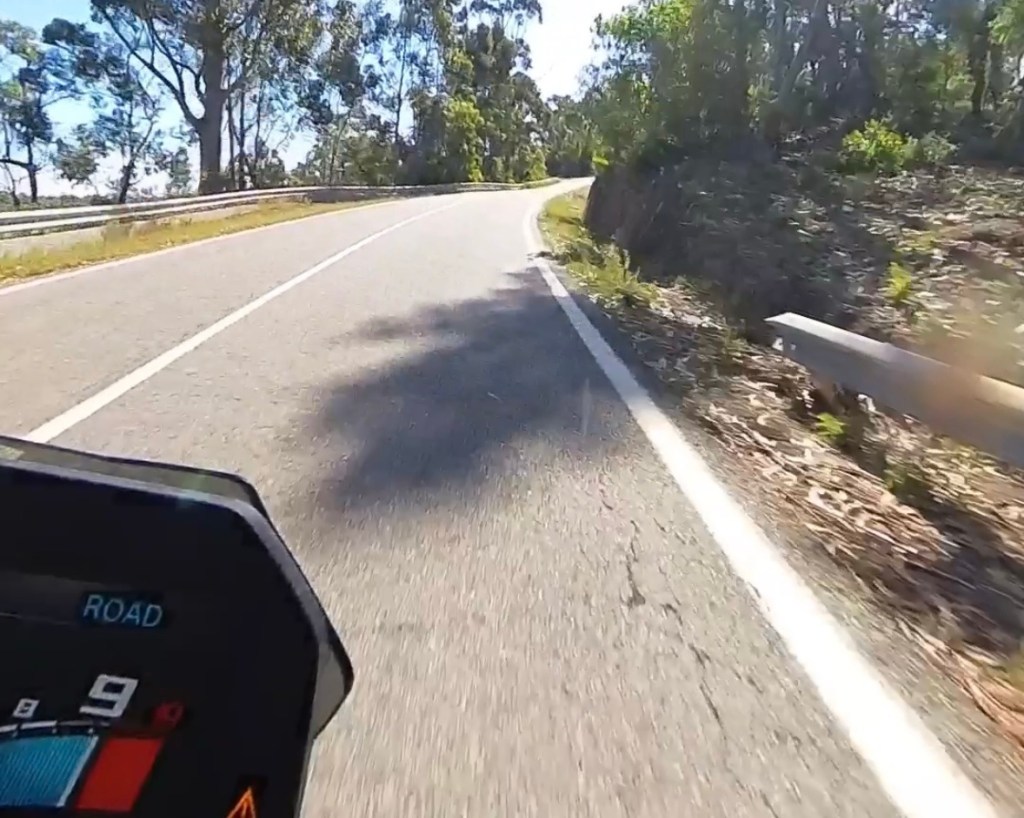
Perhaps the greatest surprise were the bike’s manners on twisty mountain roads. Although the F900R is in no way a track day star (though it could certainly perform there), I was amazed by the front end feel when trail braking deep into corners at the fastest speeds a sane person would (should?) ride on public roads. It’s clear that when choosing between comfort and sport for the bike’s suspension settings, that the bavarians chose “sport”. With its wide bars and in an experienced rider’s hands, the F900R can indeed shred tires on mountain roads, hold a cornering line well and provide confidence on imperfect tarmac conditions.
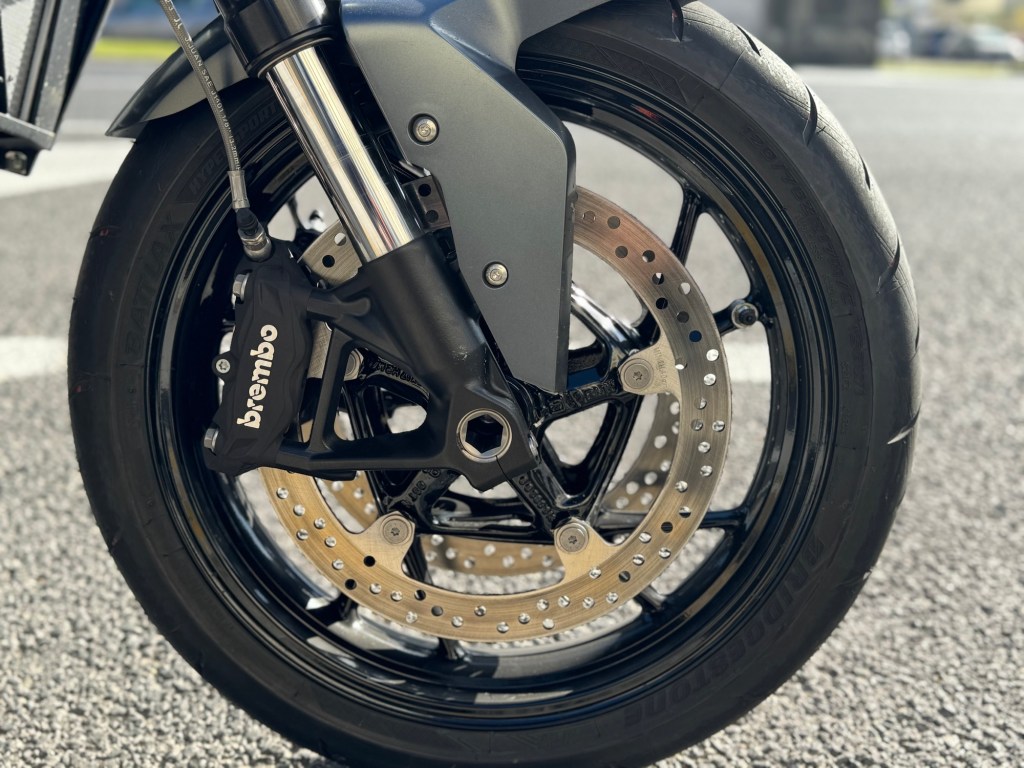
Stopping power comes by way of Brembo calipers up front (which appear to be of the M4 variety and are shared with BMW’s GS touring bikes), mated to 300mm discs and the setup is more than adequate for anything a street rider may subject this bike to. Rear brake feel was good (but again, hampered by ABS intervention).
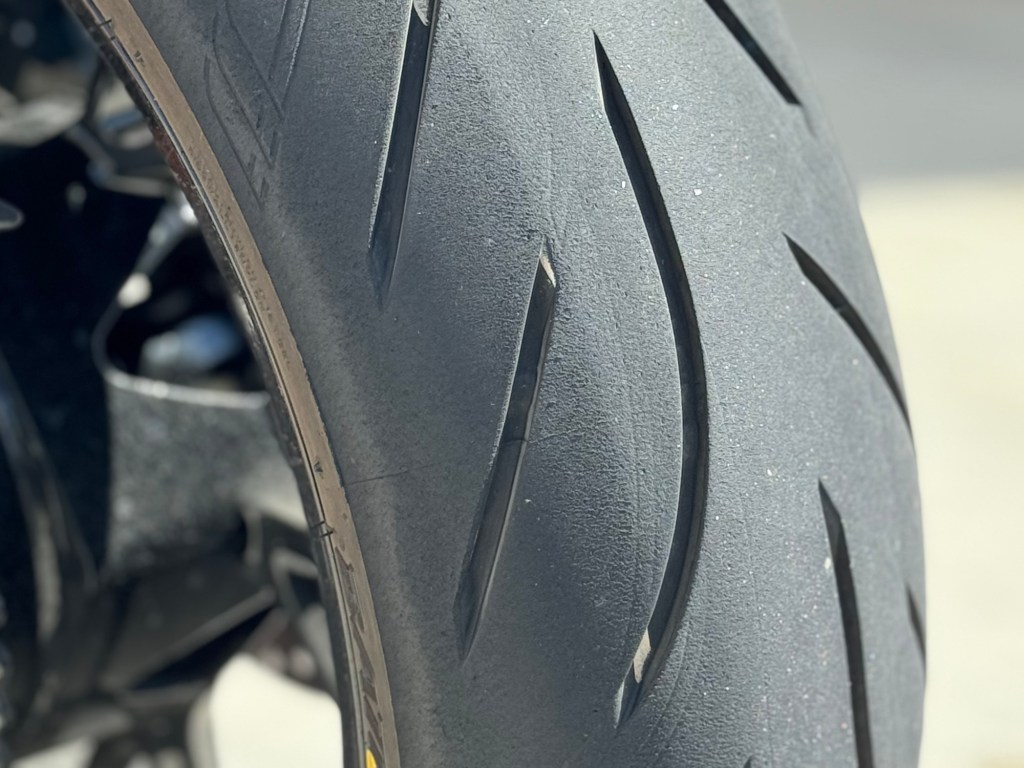
Rolling stock consists of 17” wheels (that strangely, have the valves mounted to the spokes?) and are shod in Bridgestone S21R rubber with a 120/70/17 out front and a beefy 180/55/17 bringing up the rear. The Bridgestone S21/22/23 family of tires is our current top pick for sport-oriented street riding and they are well at home on the F900R, offering a great combination of dry and wet weather grip while also wearing extremely well for a sport-focused tire
Electronics
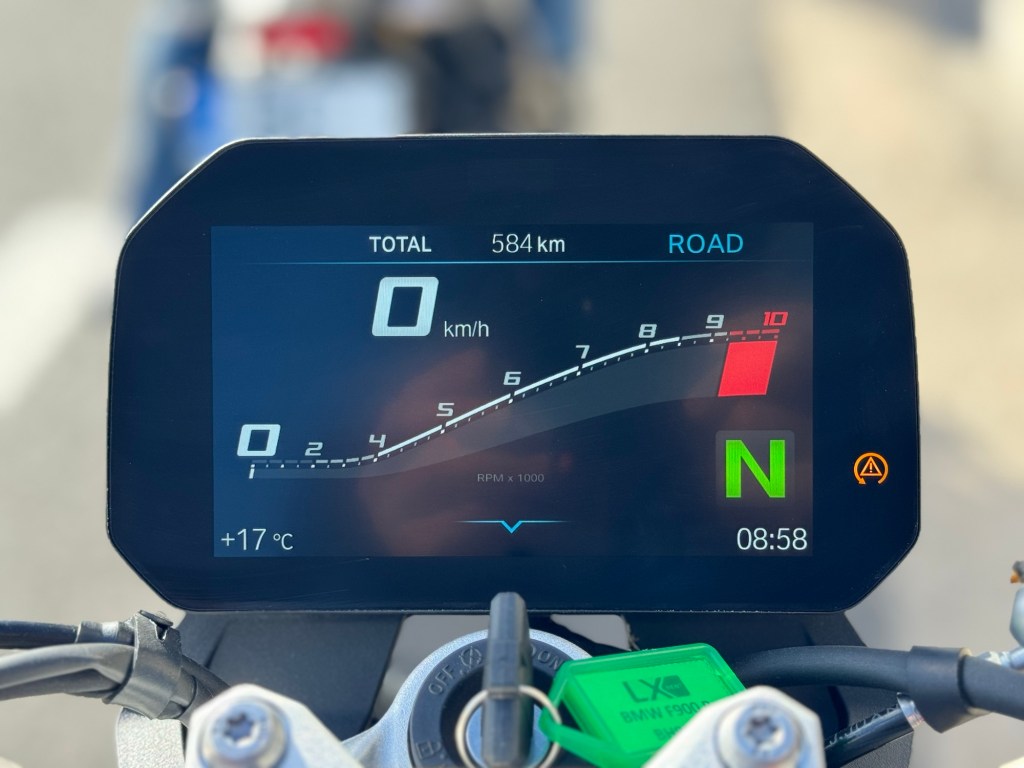
Being an auto manufacturer, BMW extends its pricing and packaging philosophy to its motorcycles. As such, the F900R can be kitted out with a variety of electronics packages which enable functionalities such as additional ride modes, electronic shock adjustment, an up/down quick shifter and advanced traction control. Our base model featured none of that however, simply providing a 5” TFT display (with a matte coating, which looked great) that’s shared across all trim levels, 2 ride modes (road and rain) along with traction control which could be disabled and ABS which could not.
Did we miss not having fancier electronics? Not really. The “road” throttle map was adequate for every type of terrain we encountered and were could disable TC for sportier riding or for “light-front-end antics” (though again, we are reminded that the ethos of the chassis is very much to remain planted and stalwart, not to wag its head in the air the way an MT-09 would). Our only real gripe in this department was not being able to disable the rear ABS so we could back it in occasionally.
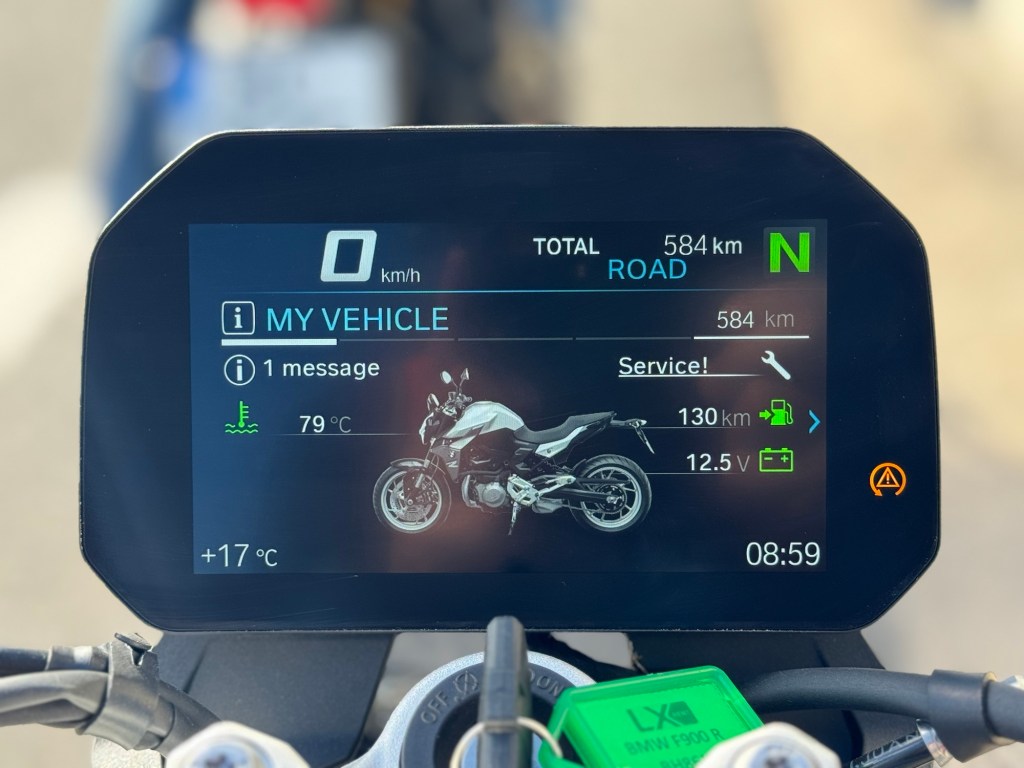
As previously mentioned, the TFT display is gorgeous, legible in all lighting conditions and features a fairly intuitive menu system – especially for anyone who has driven a modern BMW car or SUV. The German brand is clearly leveraging what it has learned about user interface design on the automotive side and is adapting it to its motorcycle lineup.
Verdict
What BMW has done in the F900R is create a bike that’s a jack of many trades and a master of none. Depending on the intended purpose and type of rider you are, this could either be high praise or a direct insult. Let’s discuss.
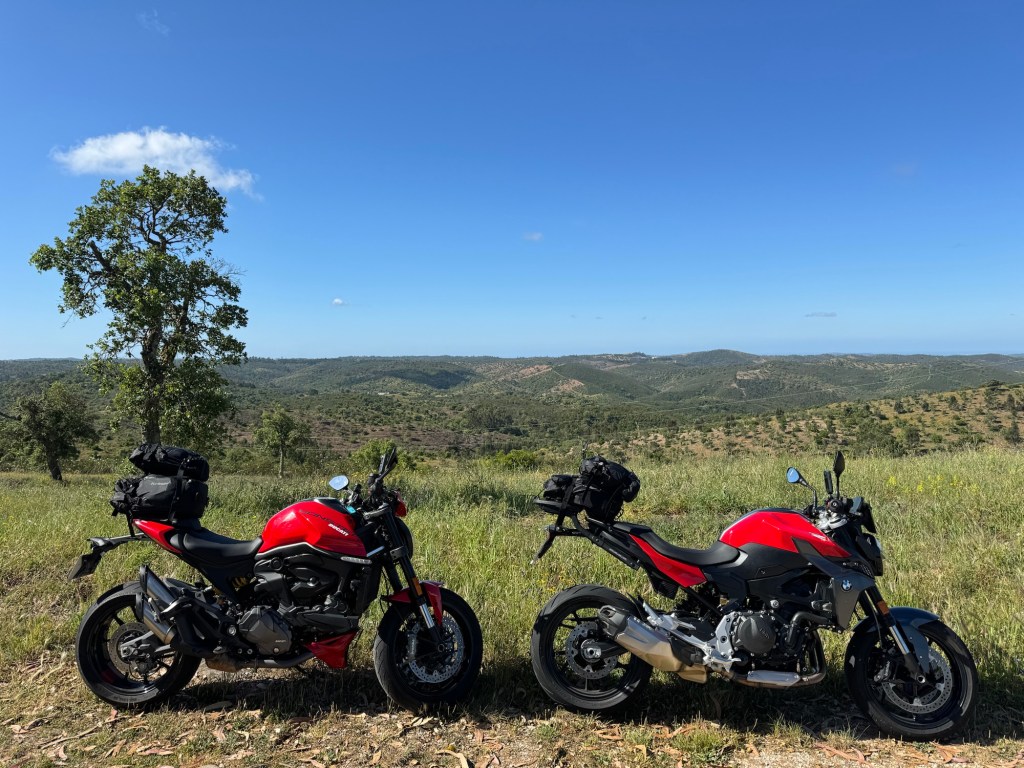
We happened to be riding the F900R alongside a Ducati Monster 937 and while both bikes are very evenly matched, the Ducati outdoes the BMW is terms of power delivery (with more high and low end punch) while not being nearly as smooth. You sit higher up on the BMW while you “sit in” the M937 and the Monster has a bit more personality with its V Twin powerplant and Italian styling. When stopped at gas stops or even when attending the Moto GP race in Jerez, most moto-enthusiasts overlooked my bemmer and walked over to the Ducati. Perhaps the BMW’s understated appearance can be a positive however and beauty, as they say is in the eye of the beholder.
The real threats to the Beemer are probably from KTM and Yamaha. In the orange camp, there has been a long line of very potent naked bikes in the 790/890 and now 990 Dukes. These “scalpels” decidedly outshine the BMW when sporty riding is the priority but give up roadgoing manners and versatility where the bimmer shines.
From Yamaha, the MT09 sets a high bar for potency, its CP3 motor still being one of the most thrilling and reliable mills in this class. Where the MT runs out of steam however is in the chassis department where it isn’t as well matched to its motor as the BMW is.
While the list of competitors continues (with Kawasaki, Honda, Aprilia, Suzuki…), the fact remains that the BMW is a solid pick for a certain segment of the market. In the end, choosing a motorcycle isn’t about outperforming, it’s about delivering the right capabilities for the right rider. If you are looking for an understated, do-it-all middleweight bike, you could do worse than the F900R.
 Chance Moto
Leave a comment