
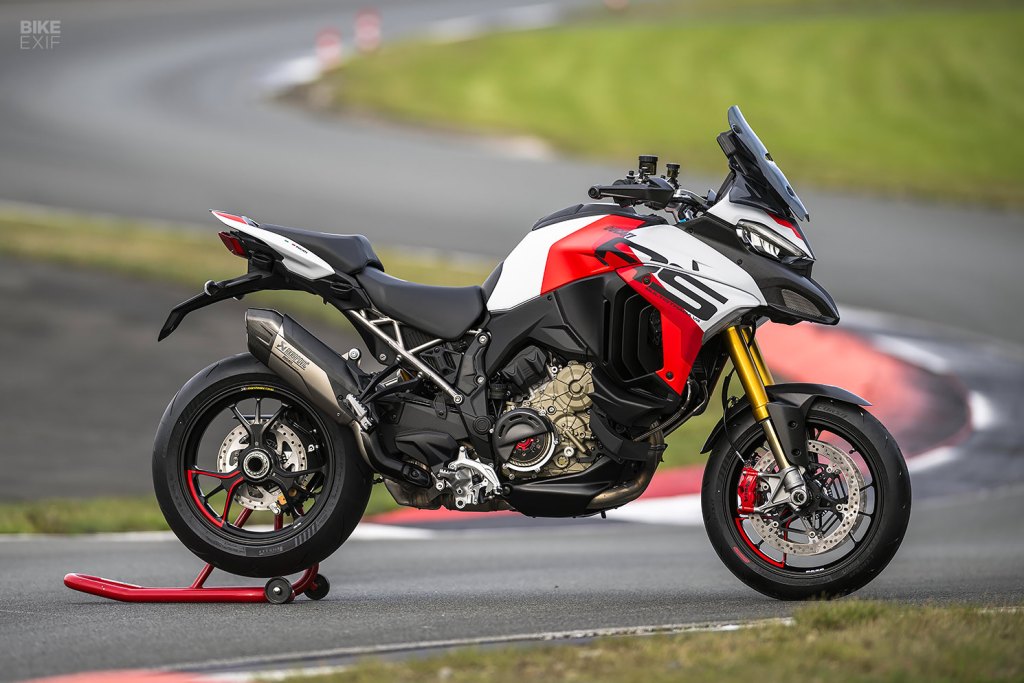
Every once in a while, motorcycle manufacturers do something out of the ordinary. They break the mold of their standard model conventions and target a very specific part of the market with a niche motorcycle. This is the story of the Multistrada V4 RS.
For those unfamiliar with the history of the Multistrada lineage, take a quick read of our recent article comparing the outgoing V2 variants to the latest generation V4 models.
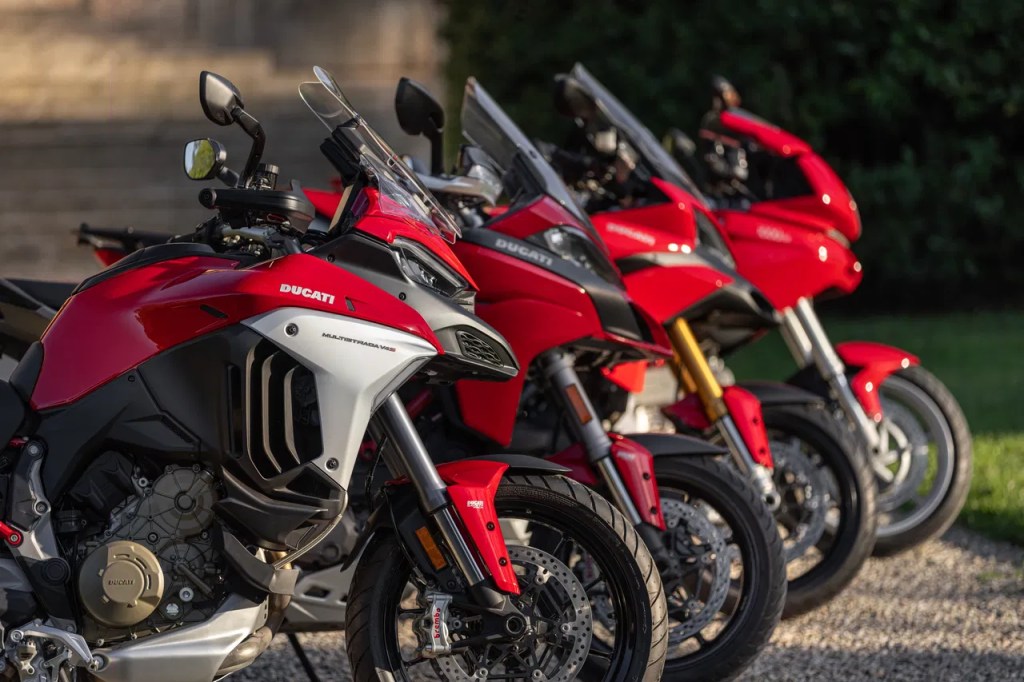
The Multistrada is Ducati’s best-selling motorcycle sub-brand. To give you a sense of scale, in 2024, Ducati sold 6,344 Monsters, 8,456 Panigales (V2 & V4 combined), but over 13,000 Multistradas (all variants). To satisfy such a large volume, Bologna has historically stratified the range with several sub-variants (in 2025, there are 8). The core product strategy behind the Multistrada is to create a “do it all” motorcycle platform, then tailor specialized variants to specific riding styles, terrain types, and price points.
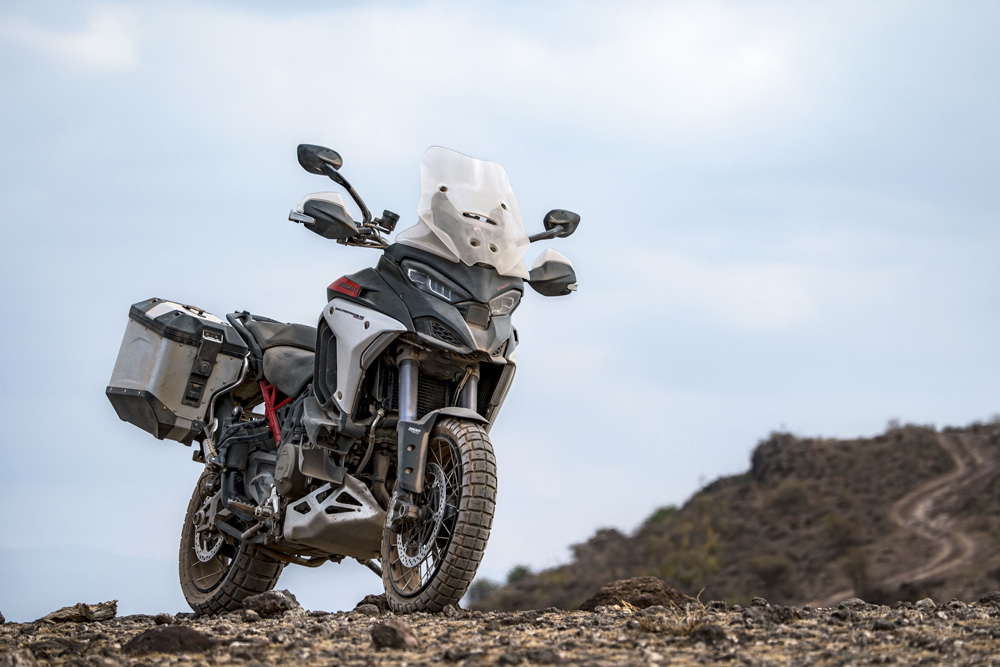
For example, a more off-road-focused rider who wants to explore back roads might choose the Multistrada V4 Rally with its 21” front wheel, knobby tires and larger fuel tank. A more sport-focused rider might choose the Multistrada V4 Pikes Peak variant, with its lighter weight, 17” wheels, sticky tires and sportier ergonomics. From Ducati’s (and parent company Audi’s) point of view, creating these variants is cost-effective as the aforementioned bikes use the same motor, sub-frame, electronics suite, and other major components, making the range more efficient from a production point of view while also maximizing the reach and appeal of the platform.
So with 7 models already in the range, why did Ducati add an 8th Multistrada model in the RS?
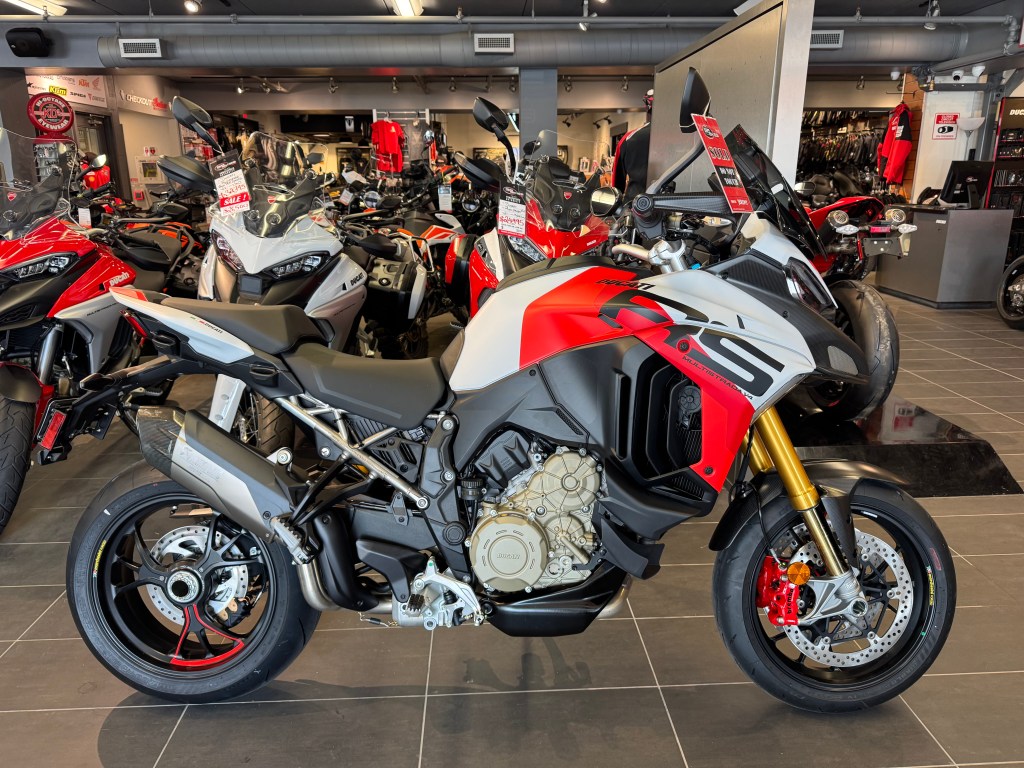
RS (acronym for “RennSport”, which is German for “Racing Sport”) is a new suffix for Ducati—but not for Audi. Those familiar with the German car brand may recall seeing the RS badging on Audi’s flagship vehicles such as the RS3, RS5, RS6, RS7 (performance variants of their “regular” sedans and coupes) and even on the RS Q8 (a performance variant of its 7-seater Q8 SUV).
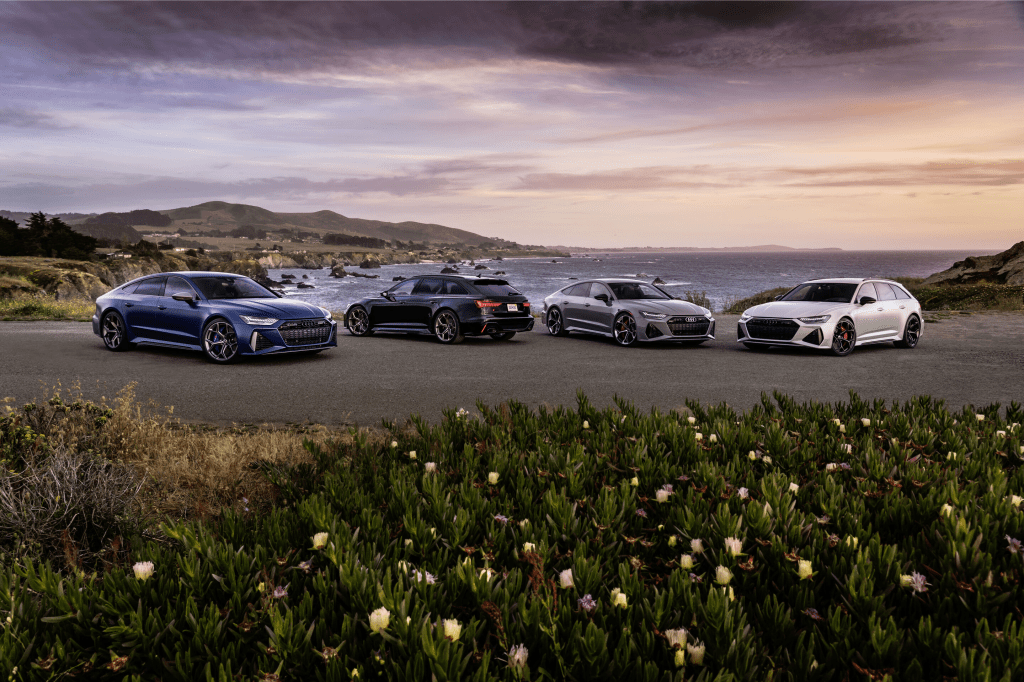
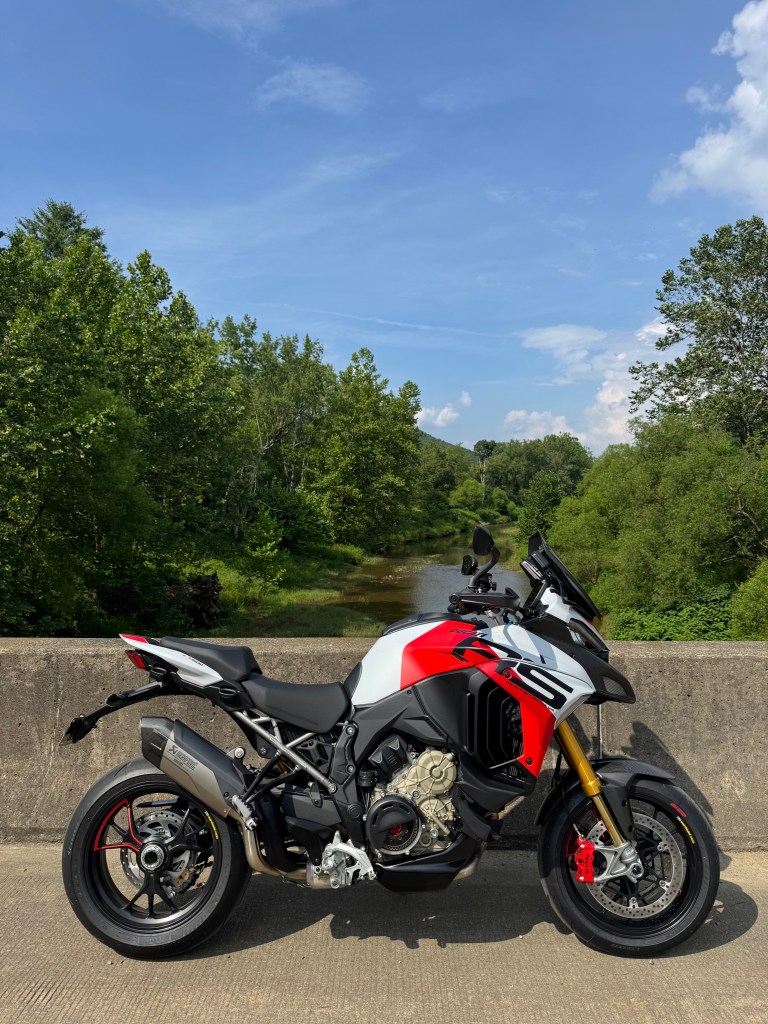
Ducati’s adaptation of the RS badge is quite similar: take the already range-topping sport version of the Multistrada (in this case, the Pikes Peak), swap the motor, and throw an assortment of high-performance parts at it to give it a harder performance edge for the true enthusiast. The Multistrada RS is the only Multistrada to feature the race-spec Desmosedici Stradale V4 motor (180 hp, 87 lb-ft of torque @ 9,500 RPM) —an 1,103 cc powerplant that was previously only available in the Panigale and Streetfighter families.
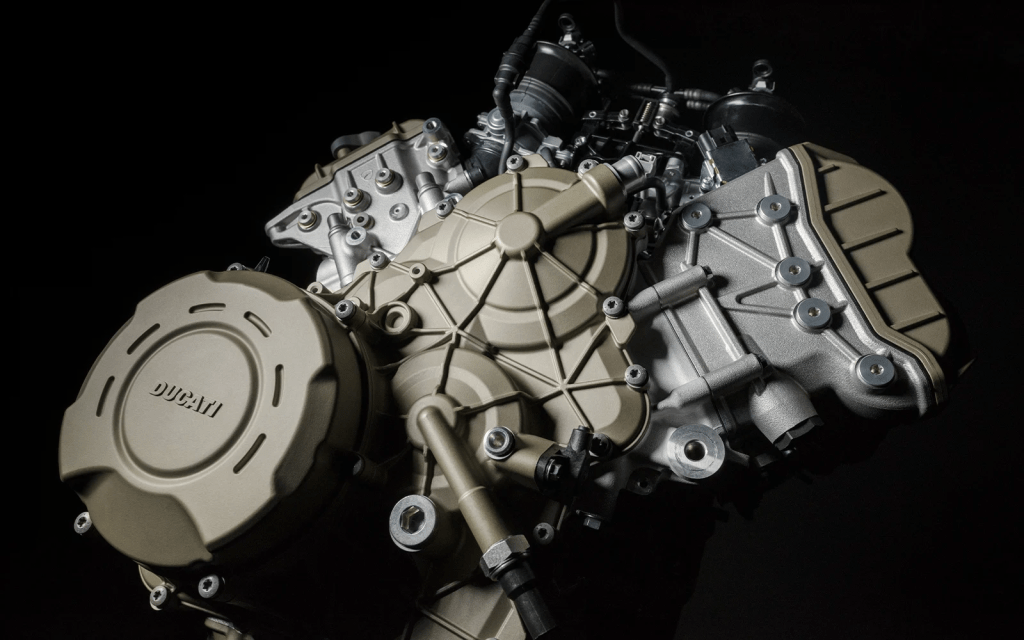
Bringing this motor to the Multistrada platform is an unusual move as Ducati’s other V4 platform, which powers the existing assortment of large displacement Multis—the 1,158 cc V4 Granturismo—is already a very potent mill (170 hp and 91 lb-ft of torque @ 9,000 RPM) with class-leading specs that’s been refined to much higher valve service intervals (60,000 km), allowing it to strike a fantastic balance between sport and touring.
As it turns out, putting the Desmo motor into the Multi creates something unusual: a higher-strung bike that begs for high revs, wheelie antics, and slides…but that’s all-day-long comfortable, can still ride 2‑up happily and can carry luggage on extended trips.
There’s an assortment of other changes that Ducati made to this bike, some of which are purely aesthetic (such as the Moto GP derived “frost white” livery) and a few of which affect performance. To the latter point, a titanium subframe and smaller battery reduce weight, while retuned electronics (including suspension algorithms), lower final gearing, sportier tires (Pirelli Diablo Rosso Corsas) and a dry clutch (the STM Evo borrowed from the Panigale R) alter the character of the Multi to be much more focused when pushing the limits of what a tall, nearly 500 lb bike can do.
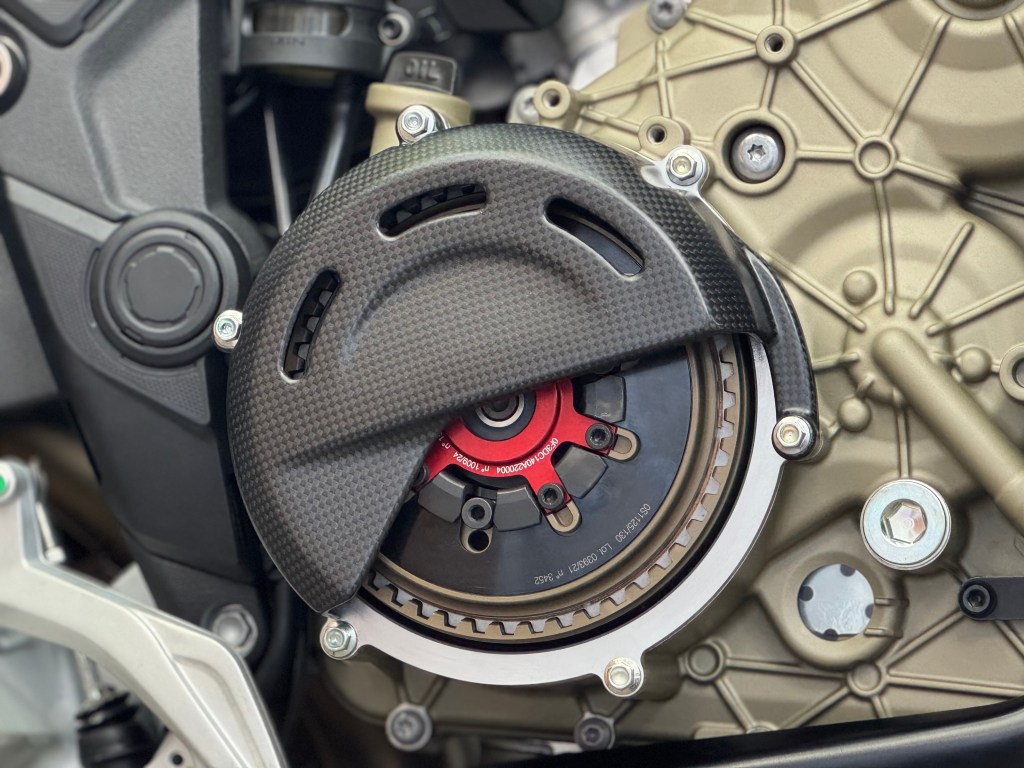
However, more performance doesn’t necessarily make for a better bike and the RS isn’t for everyone. For one, the more aggressive motor and dry clutch make the bike less civilized to live with if you’re just getting the groceries or going on a casual ride. The real-world fuel economy from the high-revving powerplant and the reduced valve service intervals from the Desmo motor (30,000 km) should dissuade true “touring” riders, who will opt to save significant $ by choosing the comparably equipped and less pricey Pikes Peak model.
The RS instead lives to eat high-speed sweepers, to loft its front wheel as you crest a hill, and to scrub off speed at an ungodly rate as you trail brake into a corner. It will happily carry a pillion and luggage, but the RS thinks of those duties more as a “side hustle” because its pedigree is that of a racer. If you read that and thought “then why not just buy a Streetfighter V4 or Panigale for less money?”, you are missing the point.

So who is this bike for then? Some will gladly pay the premium for the RS over the Pikes Peak solely for the pleasure of owning a more exclusive Ducati—as the RS features as one of Ducati’s numbered editions, joining the ranks of bikes like the Panigale SP V2 and Streetfighter SP V2 editions. Others will tolerate the bike’s newfound shortcomings, put less sticky / higher mileage tires on it, and still use it as a lust-worthy touring machine. Finally, some of the more mature Ducatisti purists will choose to own this bike instead of a Panigale or a Streetfighter and will ride the Multistrada RS the same way they would a superbike or naked bike.
Perhaps the biggest win for both Ducati as well as enthusiasts is that there now exists a bike that can do that.
 Chance Moto
Leave a comment