
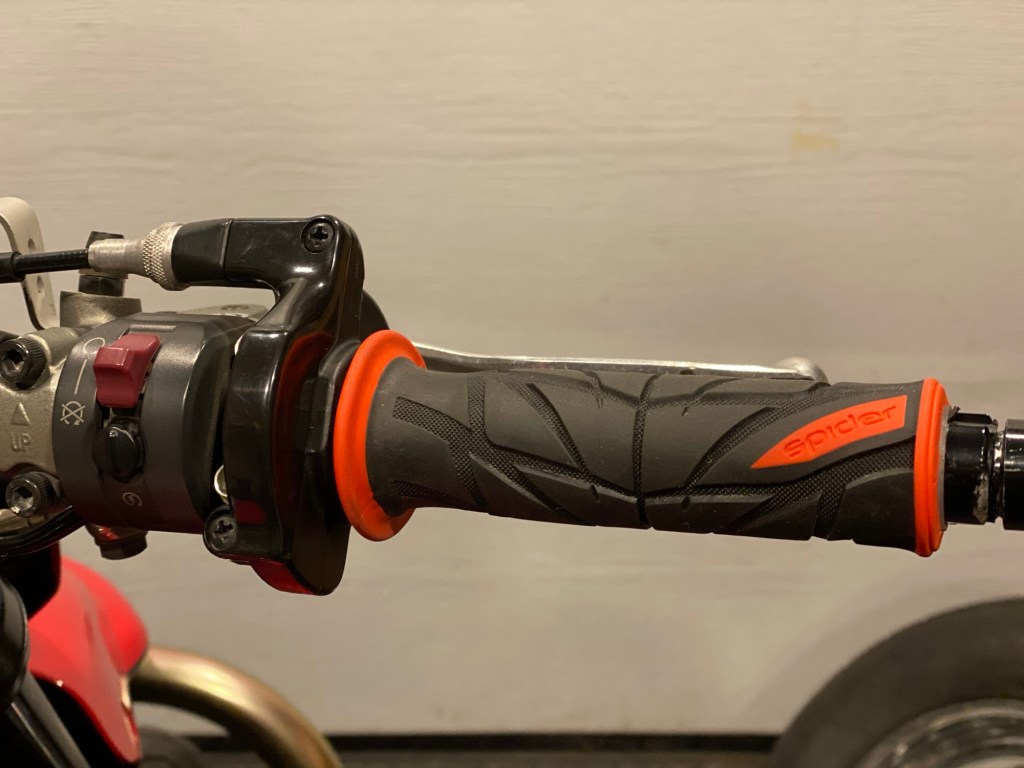
If you’re reading this, you’ve probably experienced the feeling of one or both of your hands going numb or tingling after riding a motorcycle for some time. The good news is that you’ve got options when it comes to getting some relief, if not eliminating the issue completely.
The enemy is called “harmonic resonance”, the same principle that allows a guitar string to vibrate and make a sound also causes your motorcycle’s engine to transmit vibrations through the frame, to the handlebars, seat and foot pegs. There’s no hard rule on which types of motorcycles transmit vibrations to the rider but the single best indicator is often the number of cylinders. Less cylinders (for example, singles and V twins) tend to be associated with lower frequency vibrations whereas more cylinders (triples, inline 4’s and V4s) tend to product higher frequency vibrations, especially as their rev limits tend to be higher. Some people are more sensitive to specific frequencies so it’s often hard to tell if a given bike will be problematic until you’ve ridden it for an extended period of time.
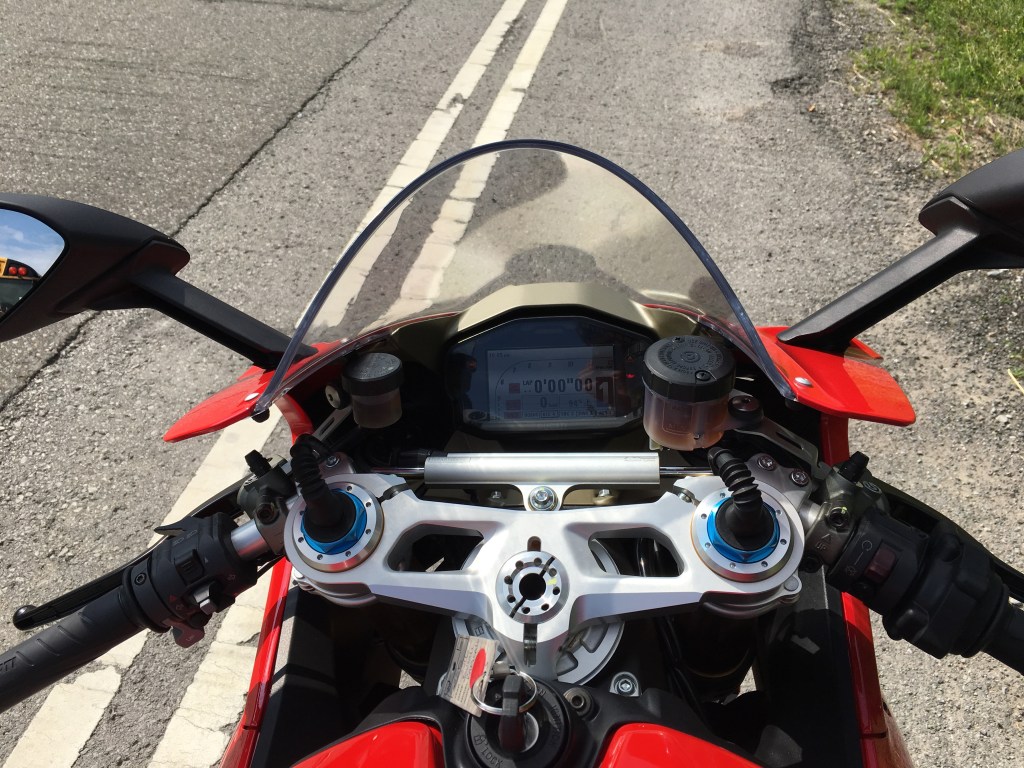
For some riders on certain bikes, this can become uncomfortable and even dangerous but there are quite a few ways to remedy this situation. We’ll divide these into Hardware Solutions (things you can buy or add to the bike of to your body) as well as Rider Solutions (things you can do as a rider).
Hardware Solutions to Reduce Handlebar Vibrations
- Add bar end weights, fill your bars with silicone or go as far as a weighted bar solution such as BarSnake or even replacing your bars entirely with purpose-built anti-vibration bars. The theory being that heavier bars transmit less vibrations than typically light and hollow OEM bars.
- Get rubber handlebar mounts (if your bike doesn’t have them already as many OEMs do this)
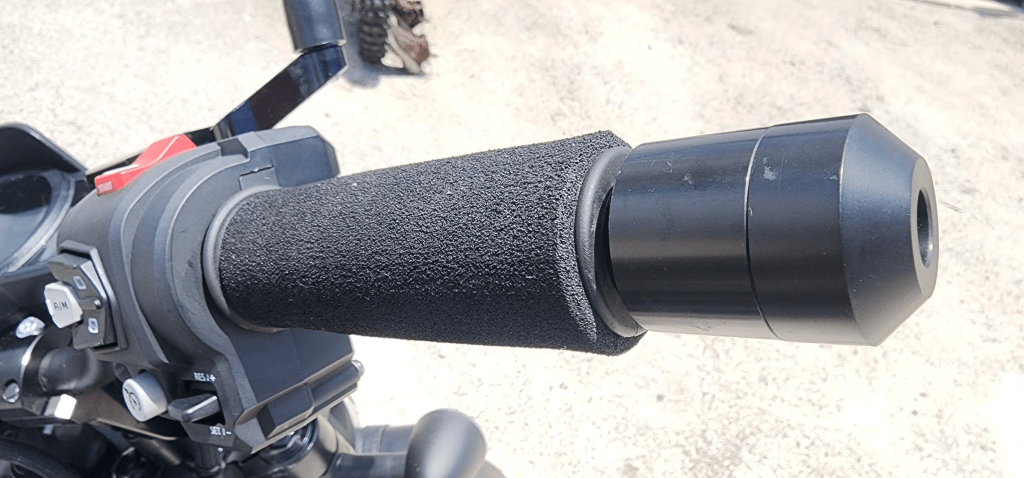
- Get foam grip covers (such as Grip Puppies)
- Wear thicker gloves or gloves with more padding to cushion you hands from the vibrstions
- Keep your hands warm in colder weather by fitting heated grips and/or bar-mounted hand guards (to deflect wind). Colder hands have less blood circulation and will amplify the sensation of vibrations so keeping your hands warm is a good idea.
- Balance your tires (as vibrations don’t necessarily come from the engine and can also come from improperly balanced tires) and if your bike has a cush drive, inspect it for wear.
- If you are feeling vibrations off road, review your suspension setup to ensure correct dampening.
Rider Solutions to Reduce Handlebar Vibrations
- Loosen your grip on the bars (in our experience, most riders tend to grip too tight which transmits more of the vibrations to your hands)
- Vary your RPM / learn where your bike makes the most problematic vibrations and avoid that range where possible, especially when cruising for extended periods of time
- Use cruise control (if your bike is equipped) to give your hands regular breaks.
- Add “bar vibrations” to your buying criteria next time you buy a bike. Although mainstream publications don’t always point this out, user forums always will. Do your research or ask your favorite AI agent to help you.

Here’s a handy table, specific to each motorcycle type:
| Vibration Type / Source | Sport & Naked Bikes | Adventure & Dual-Sport | Cruisers & Touring | Notes / Examples |
|---|---|---|---|---|
| High-frequency “buzz” (engine revs, small displacement, inline-4 / twins at high RPM) | Heavy bar-end weights (HVMP, RhinoMoto) Gel or foam grips (Pro Grip 714, Grip Puppies) Internal bar inserts (Vibranator, Bar Snake) |
Anti-vibe risers (Rox, BRP) Softer grips Elastomer-mounted handguards (Cycra CRM) |
Thick foam grips (Avon, Kuryakyn ISO) Weighted bar ends if applicable |
Target RPM to see if weight shift changes resonance; often solved by changing handlebar resonance frequency. |
| Low-frequency “thump” (single- or twin-cylinder, big torque pulses) | Rubber-mounted risers (ProTaper) Fill bars with silicone or foam |
Flexx bars (FasstCo) Elastomer risers |
Rubber-isolated handlebar clamps Larger/heavier bars |
Low-frequency vibes are harder to damp—focus on isolation and bar flex, not just weight. |
| Resonance at specific RPM (harmonic match between bars & engine) | Heavier bar ends Change bars to different wall thickness/material Internal dampers |
Adjust engine idle & throttle sync Add risers or change bar bend |
Modify handlebar geometry or add isolation bushings | Shifting resonance often works better than trying to absorb it. |
| Off-road chatter & impacts (suspension feedback through bars) | Rare—usually suspension tuning first | Flexx bars Anti-vibe risers Handguard mounts with rubber isolation |
Rubber-mounted risers if used off-pavement | Suspension setup often gives bigger gains than bar mods here. |
| General mechanical vibration from engine/wheels | Wheel balancing Engine tuning (sync throttle bodies, check mounts) Replace worn cush drive rubbers |
Same as sport bikes | Same as sport bikes | Always start here before adding aftermarket parts—fix the source first. |
 Chance Moto
Leave a comment